
Quick answer
A Framer developer builds production marketing sites in Framer — layout, components, CMS, interactions, and performance. Expect $60–$140/hour for a freelancer, or $1,200–$2,500 per week for a studio retainer. Hire a freelancer for a single site with a settled brand; hire a studio when design, build, and ongoing changes need to move together.
Key takeaways
- Framer work splits into three jobs: design, build, and maintenance — most bad hires happen when a brief only covers one.
- Ask for a live URL you can inspect, not a portfolio screenshot. Framer sites are public; the build quality is visible.
- CMS structure and component naming are the difference between a site your team can edit and one only the builder can touch.
- Day rates suit fixed launches; weekly capacity suits continuous work. Avoid per-page pricing — it prices layouts, not outcomes.
What a Framer developer actually does
The title covers a wider range than it sounds. On most projects the work falls into four areas, and very few people are equally strong at all of them. When we do the job, it is Framer development — layout, CMS, motion, and a site your team can publish in.
Stacks, grids, and breakpoints that hold up from 320px to ultrawide without hand-tuned exceptions.
Reusable, properly named components with variants and props — so the site scales past its first ten pages.
Collections, fields, and relations designed so non-technical editors can publish without breaking layouts.
Scroll and hover behaviour that adds meaning, plus image, font, and effect budgets that keep Core Web Vitals green.
"Framer designer" and "Framer developer" are often used interchangeably. If your brand is unsettled you need the first; if you have designs and need them live, you need the second. Say which one in the brief.
What it costs
Rates vary by region and by whether you're buying a person or a team. These are the ranges we see quoted in 2026 for English-speaking markets.
| Engagement | Typical rate | Best for |
|---|---|---|
| Freelance, hourly | $60–$140/hr | Small changes, fixes, one-off pages |
| Freelance, project | $3,000–$12,000 | A defined marketing site with settled design |
| Studio, day rate | $500–$900/day | A fixed launch date with a clear scope |
| Studio, weekly retainer | $1,200–$2,500/wk | Continuous design + build with changing priorities |
Rates above are market ranges we observe, not quotes. Nuttifox publishes its own rates on the contact page.
How to write the brief
A good Framer brief is short but specific. These five lines remove most of the back-and-forth before it starts.
- 01State the outcome, not the page count
"A site that explains the product and books demos" beats "8 pages" — page count is an output of the work, not the goal.
- 02Say what exists
Brand assets, Figma files, copy, and whether any of it is final. Unfinished copy is the single biggest cause of slipped launches.
- 03Name who edits it after launch
If marketing will publish posts weekly, CMS design matters more than a bespoke hero animation.
- 04Set the launch constraint
A real date with a real reason. "Q4" invites drift; "before the Nov 12 conference" doesn't.
- 05Define what happens next
Handover, retainer, or nothing. Builders make different structural choices depending on who maintains the site.
How to vet candidates
Framer sites are public and inspectable, which makes vetting far easier than most disciplines. Do these four checks before any call.
- Open a live site they built and resize the window slowly. Watch for layouts that break between breakpoints rather than flowing between them.
- Run PageSpeed Insights on that URL. Framer's baseline is fast; a slow Framer site is a build decision, not a platform limit.
- Ask to see the CMS in a screen share. Well-named collections and fields signal someone who has handed sites over before.
- Ask what they'd remove from their own last project. Answers reveal judgment more reliably than portfolios do.
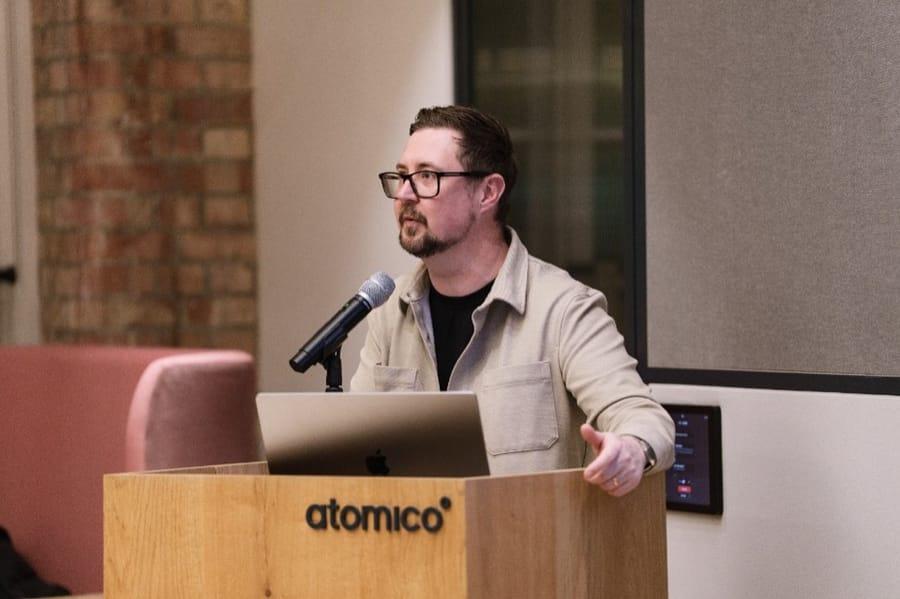
“The fastest signal is whether they can explain a decision they later reversed. Builders who have maintained their own work always can.”
Chris NutbeenNuttifox
Freelancer or studio
| Freelancer | Studio | |
|---|---|---|
| Best fit | One site, settled brand, clear scope | Design + build together, evolving scope |
| Continuity | Single point of failure | Cover across a team |
| Ramp-up | Days | Days to a week |
| Cost at low volume | Lower | Higher |
| Cost at continuous volume | Comparable, harder to scale | Predictable weekly capacity |
Neither is better in the abstract. The honest test is how much change you expect after launch: a site that's finished on launch day suits a freelancer, and a site that's a channel suits a team.
Red flags
- Per-page pricing — it rewards adding pages, not solving the problem.
- No live URLs, only images. Screenshots hide responsive and performance behaviour.
- Everything built as one-off frames with no components. It looks fine on day one and blocks every change after.
- Refusal to hand over the project. You should own the Framer project outright.
- Motion on everything. Effects without a reason are the clearest tell of an inexperienced build.
FAQ
Do I need a Framer developer or a Framer designer?
If your brand and layouts are unsettled, hire a designer who works in Framer. If you have designs and need them built, responsive, and CMS-driven, hire a developer. Studios usually cover both under one engagement.How long does a Framer marketing site take?
A focused 5–8 page site with final copy typically takes 2–4 weeks. Unfinished copy is the most common reason that stretches.Can my team edit the site afterwards?
Yes, if it's built for that. Ask for CMS collections and named components up front — retrofitting them later is significantly more work.Is Framer suitable for a large site?
For marketing sites, yes — CMS collections handle hundreds of pages comfortably. Application-style interfaces behind a login are a better fit for React.What should I own at the end?
The Framer project itself, the domain, and any assets. Transfer should be part of the agreement before work starts, not a conversation at the end.Have something to build? Let’s ship it.
 Book a call